A journey to transform a garden and find beauty, serenity and sustainability.
Problem: An East-Coast garden under a California sky; soulless, uninviting and thirsty.
Solution: Start with a blank slate; then put nature back into your garden and rediscover its soul.
A while after moving into their Southern California home, it occurred to the homeowner how unwelcoming its existing landscape was: Its East-Coast style with lawn and roses didn’t work for this Ranch-style house with its striking architecture. Nor did it meet the homeowner’s desire to conserve water.
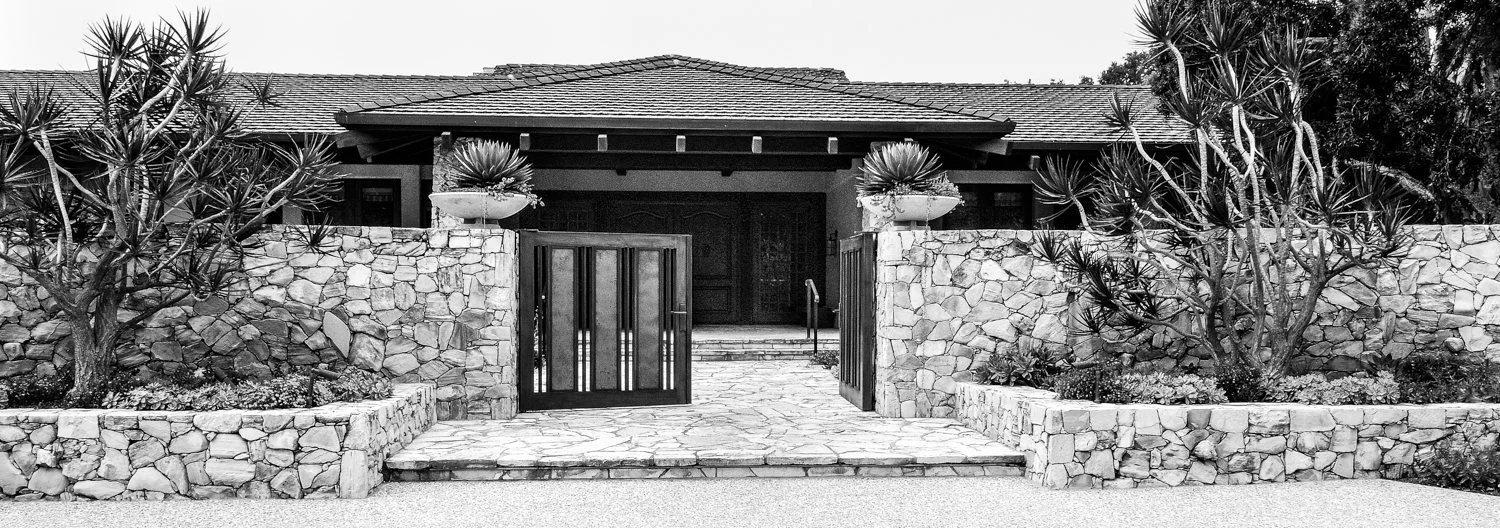
This home, designed by Ken Ronchetti, whose architecture has a soft strength in its simplicity with a Frank Lloyd Wright feel, invited an “unclipped” and serene landscape that would thrive even with sparing amounts of water and that would incorporate California landscape elements: Clear skies and brilliant light, boulder-strewn valleys, deserts and water-wise native plants. Could succulents, California native and other water-wise plants, until then unknown to her, complement and hold up to this architecture?
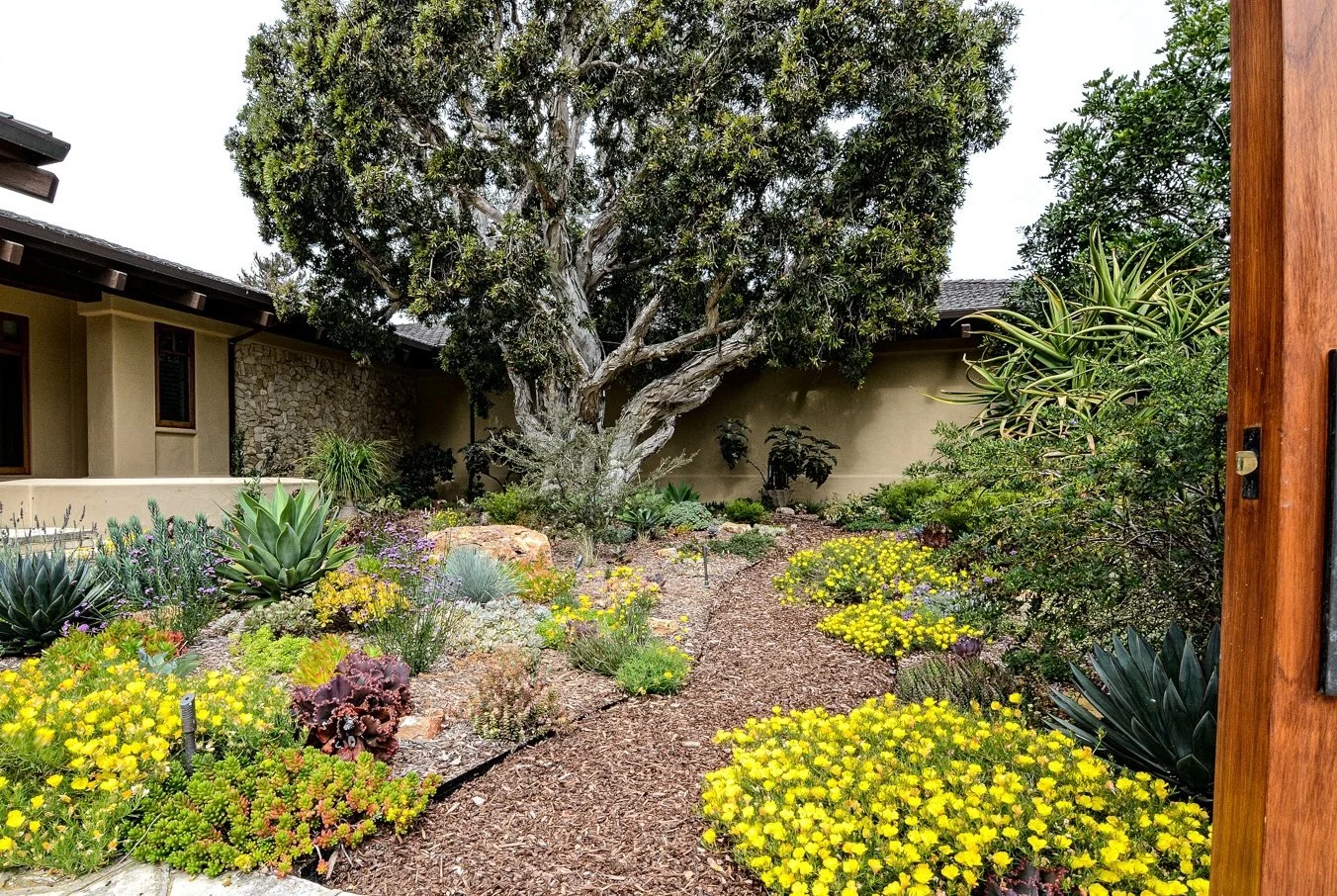
My first priority as designer was to integrate the existing Live Oak and Paperbark Tree; both have reached a beautiful maturity and fit into the water-conservation model. The stone cladding of walls and pilasters create a strong element, so incorporating boulders would play up their strength.
We subdivided the area into separate spaces to be discovered on a path, so that a visitor is put into the landscape, not just viewing it from the sidelines.
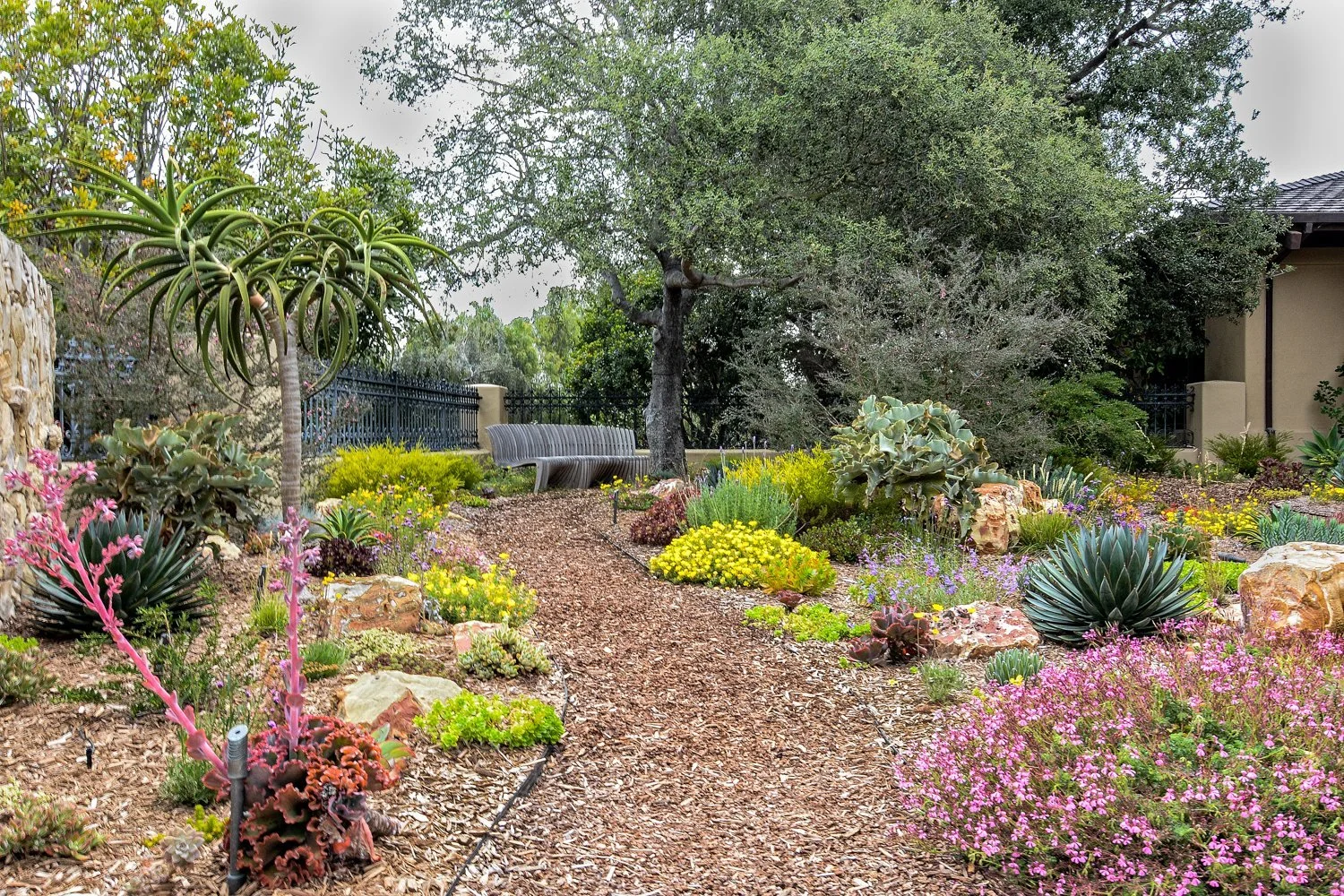
The path meanders past different planting scenes and invites you to stop at the bench under the Oak tree, to rest and contemplate a tapestry of perennials, woody California native shrubs and succulents that are endlessly entertaining and consume very little supplemental water.
The courtyard is walled and fenced in, so the landscape needed to stay open and allow a feeling of depth. Therefore the plant compositions stay mainly low, so that the eye can wander across the tapestry of interesting plants.
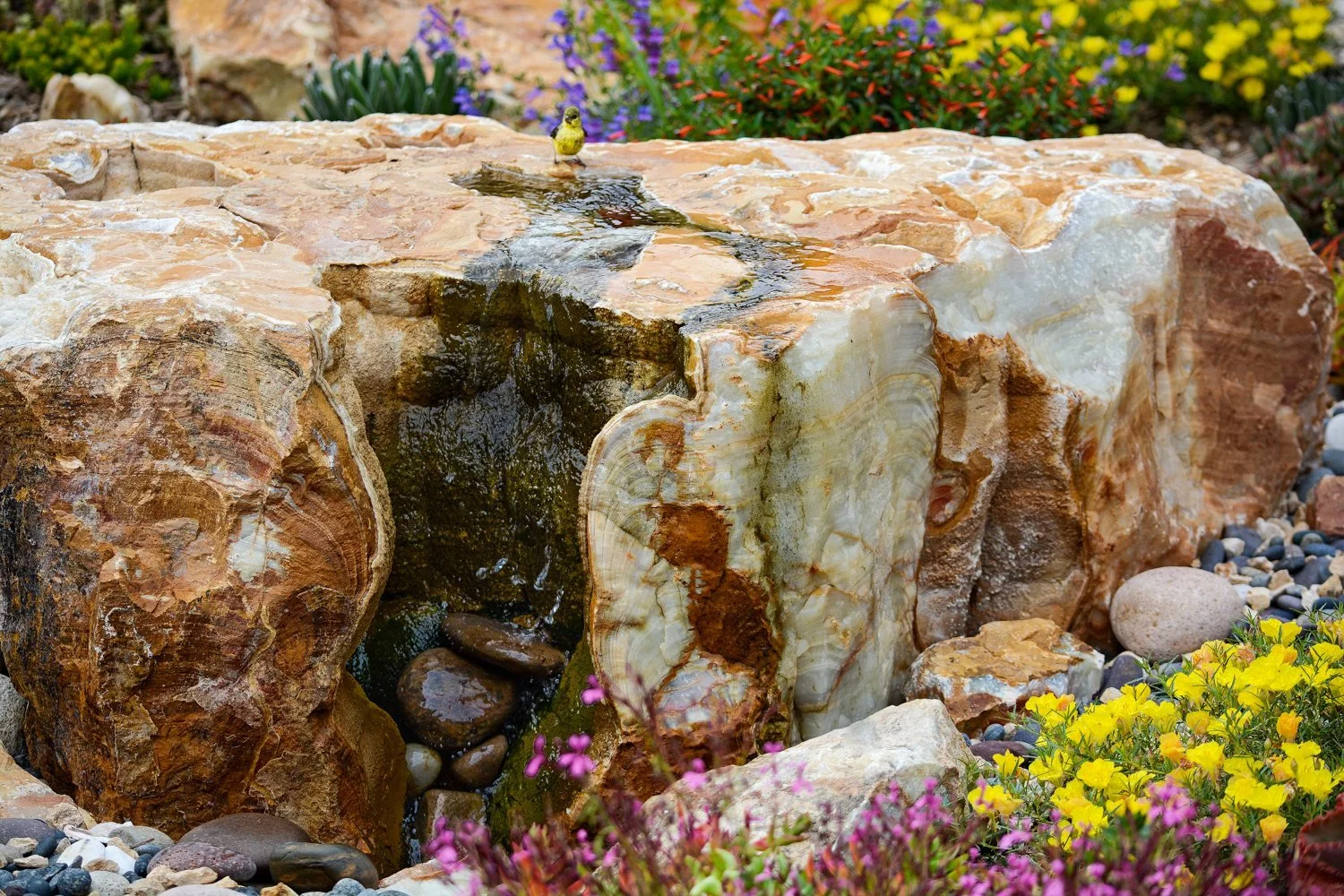
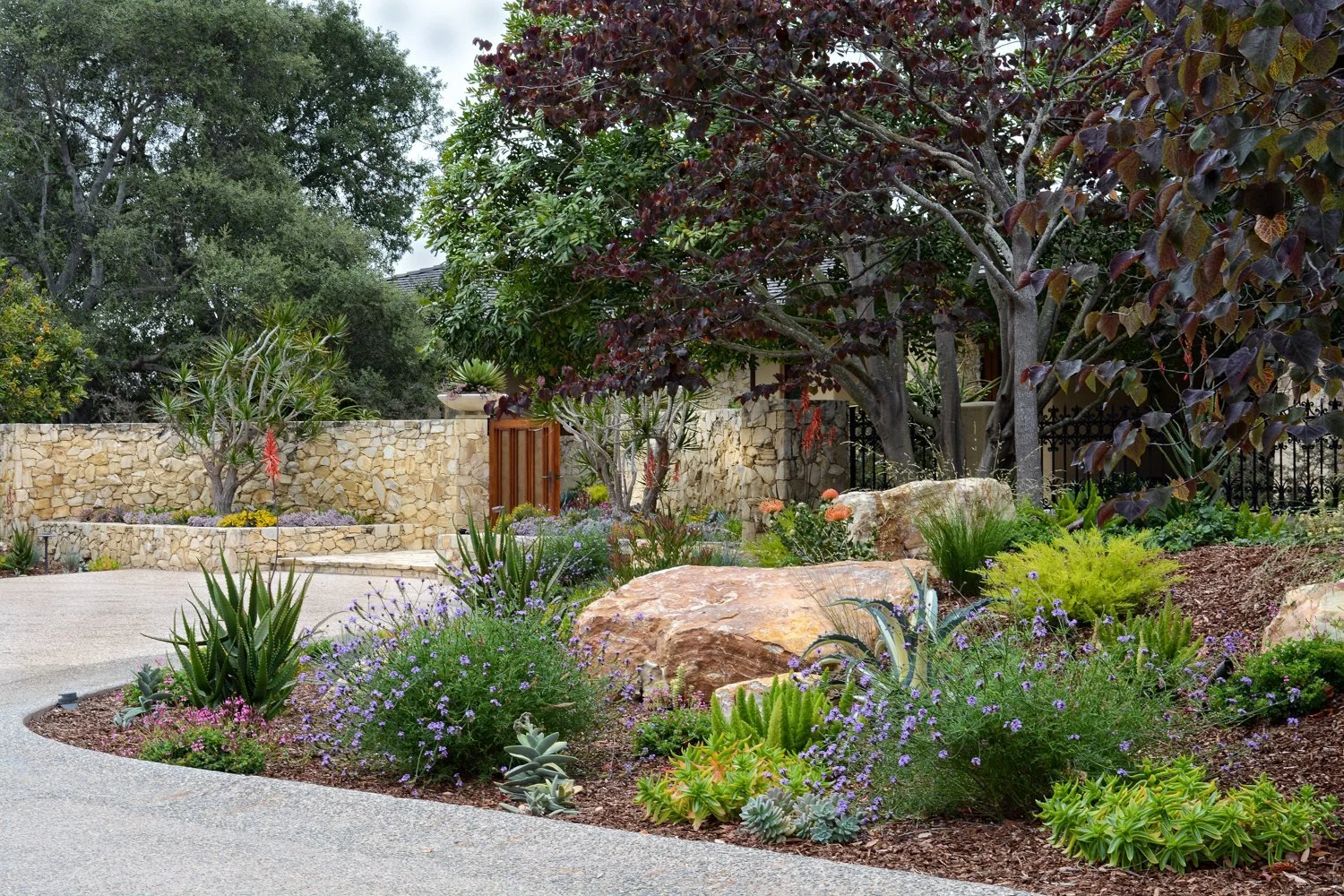
Many beautiful boulders echo the rugged stone element used for walls, walkways, and pilasters. Among them a bubbling boulder is the focal point upon arrival. It is surrounded by plants that highlight its beauty and ruggedness.
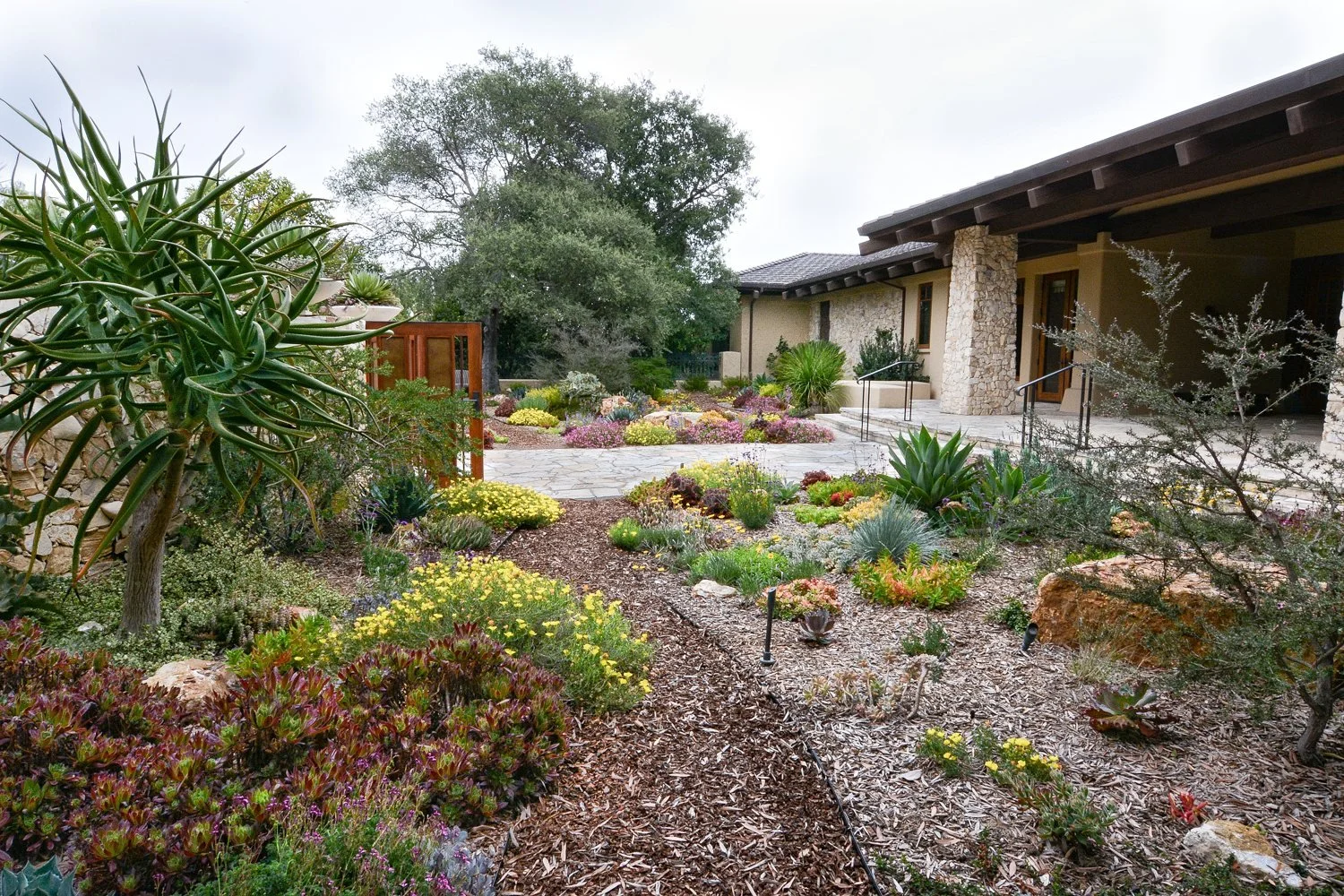
The heavy downpour during a recent thunderstorm tricked a Mountain Lilac Ceanothus ‘Concha’ (on the right) into re-blooming several months after its first bloom this spring. It makes a lovely companion to other lower growing unthirsty plants.
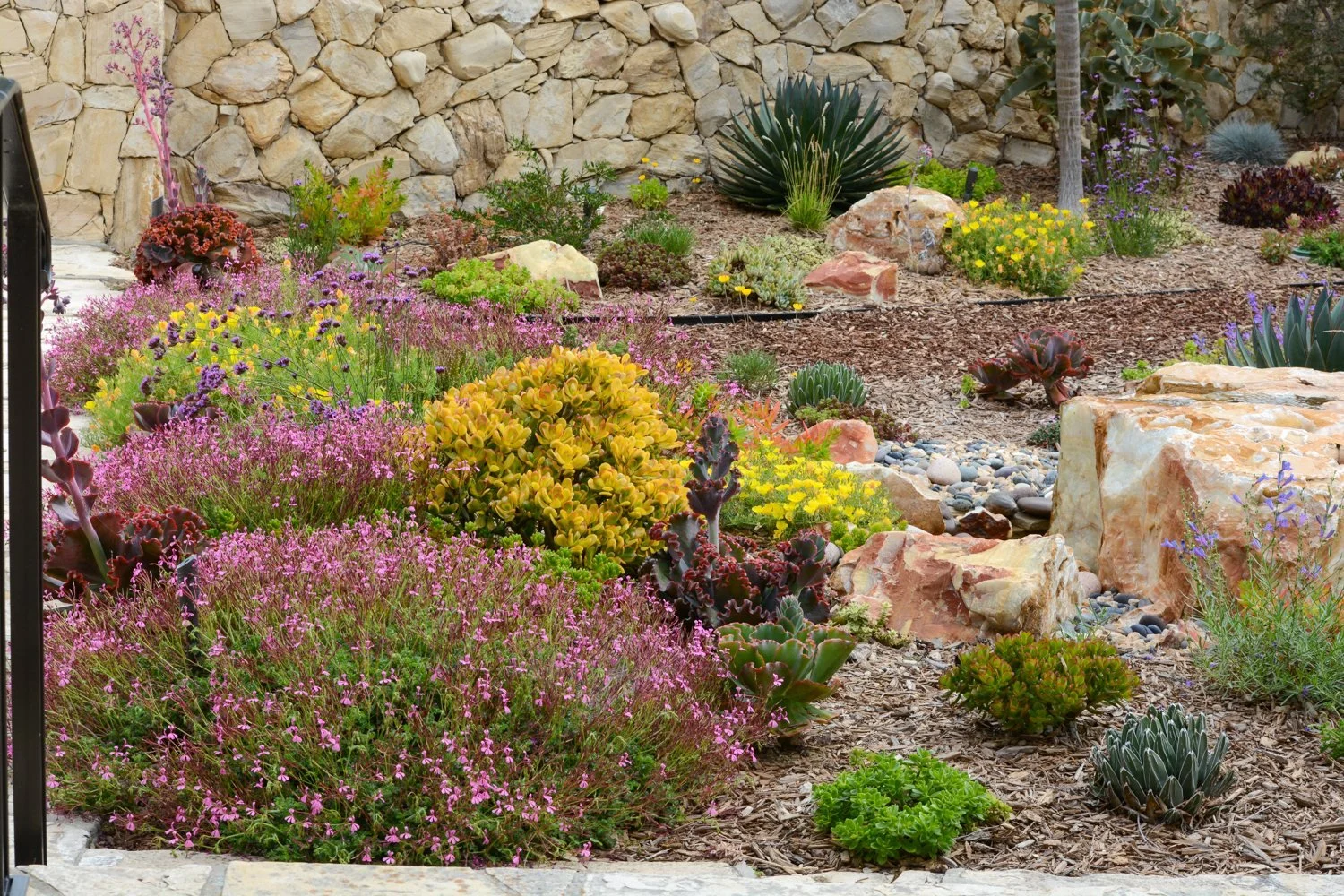
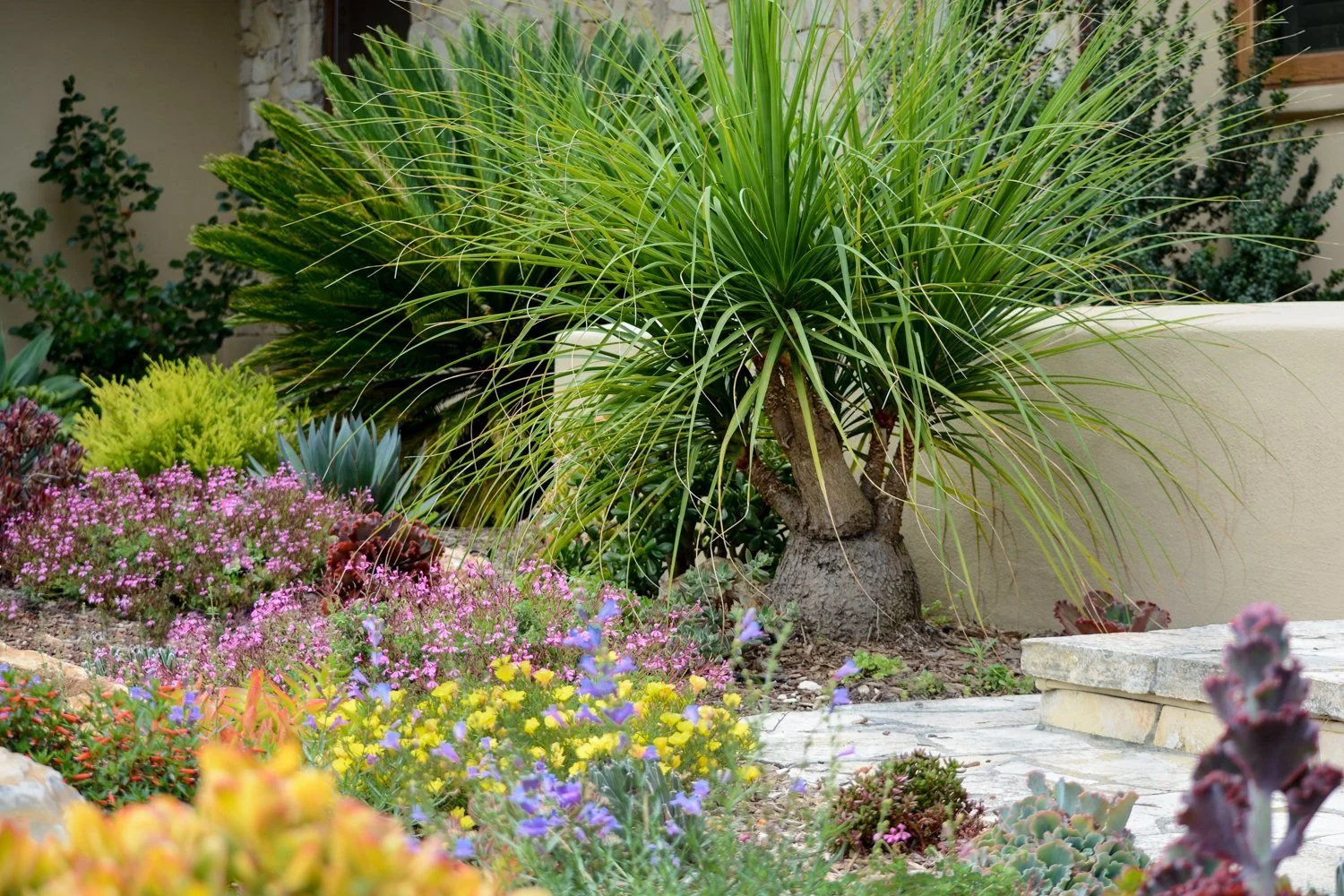
It is a balancing act to create harmony and cohesion with a limited plant palette, but limiting it is important to avoid a hodgepodge and mere plant museum. Here, ‘Pink Spice’ Geranium Pelargonium ionidiflorum mingles with Echeveria ‘Ruffles’, Verbena ‘Little One’ Verbena bonariensis ‘Little One’, and Sundrops Calylophus drummondii, plants that I like to integrate again and again because of their many benefits: Unthirsty, need only occasional trimming back (Geranium and Sundrops), long-lasting flower show and “everlasting” form and texture (the succulents).
This garden is very much an experimental site: It is growing, evolving and confirms our trust in the future as the plants mature. Some of these plants, such as Blue Sedge Carex flacca, have shown to be the wrong choice for this garden (they never stopped sprawling). Finding the right amount of supplemental water is a bit of a challenge, as with varying sun exposure, tree canopies and roof overhang there are more individual watering zones than one might expect.
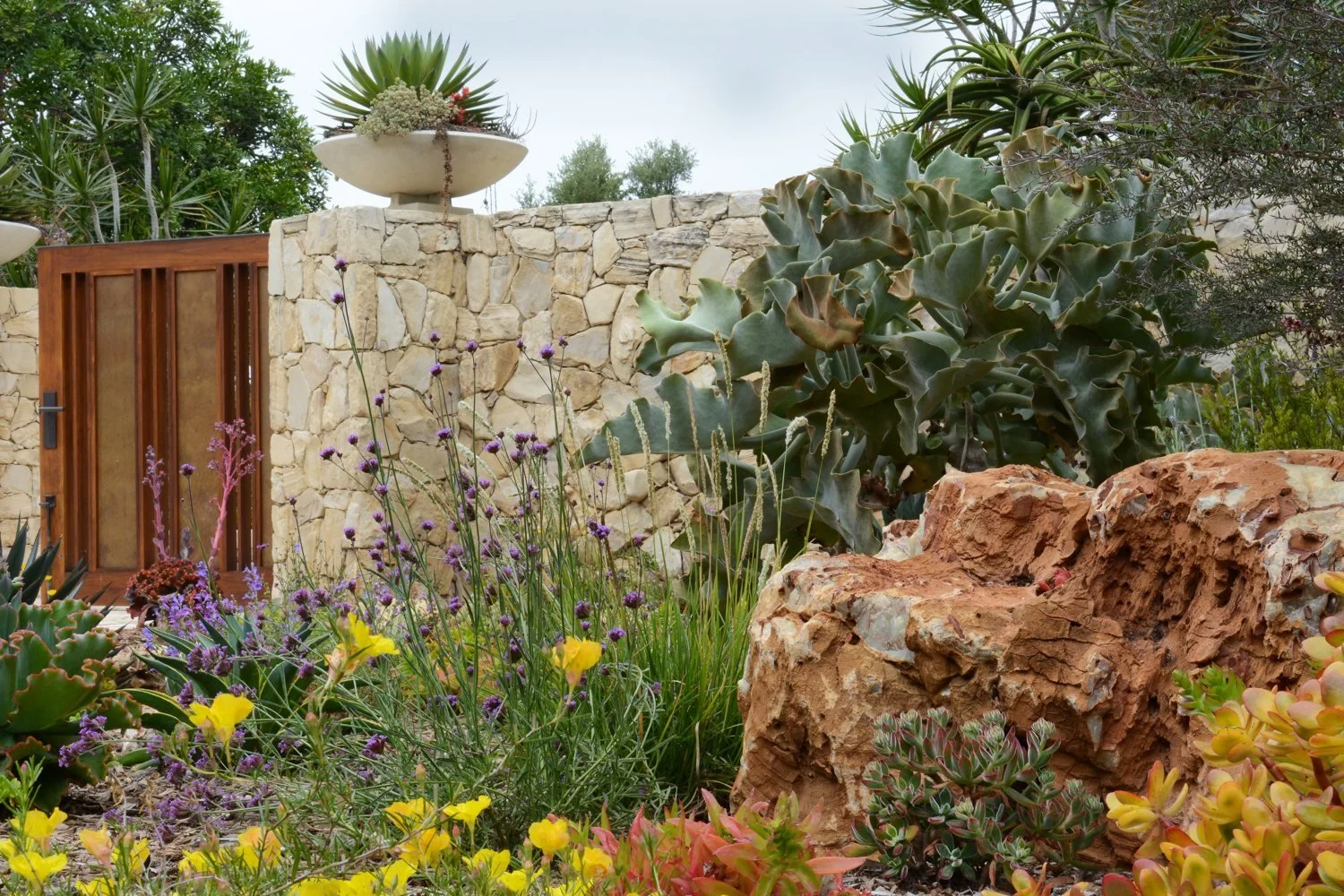
I’m passionate about juxtaposing different textures and forms to create tension and interest, so placing a wispy grass or delicate perennial next to a heavy boulder is a must. Also appealing to me is placing a fleshy succulent next to the rugged mass of a boulder; I feel that both complement each other, and although the Sunset Jade Crassula argentea in this picture can’t hold up to the sturdiness of the rock, it’s equally robust and ‘weighty’, and both heighten each other’s individual qualities.
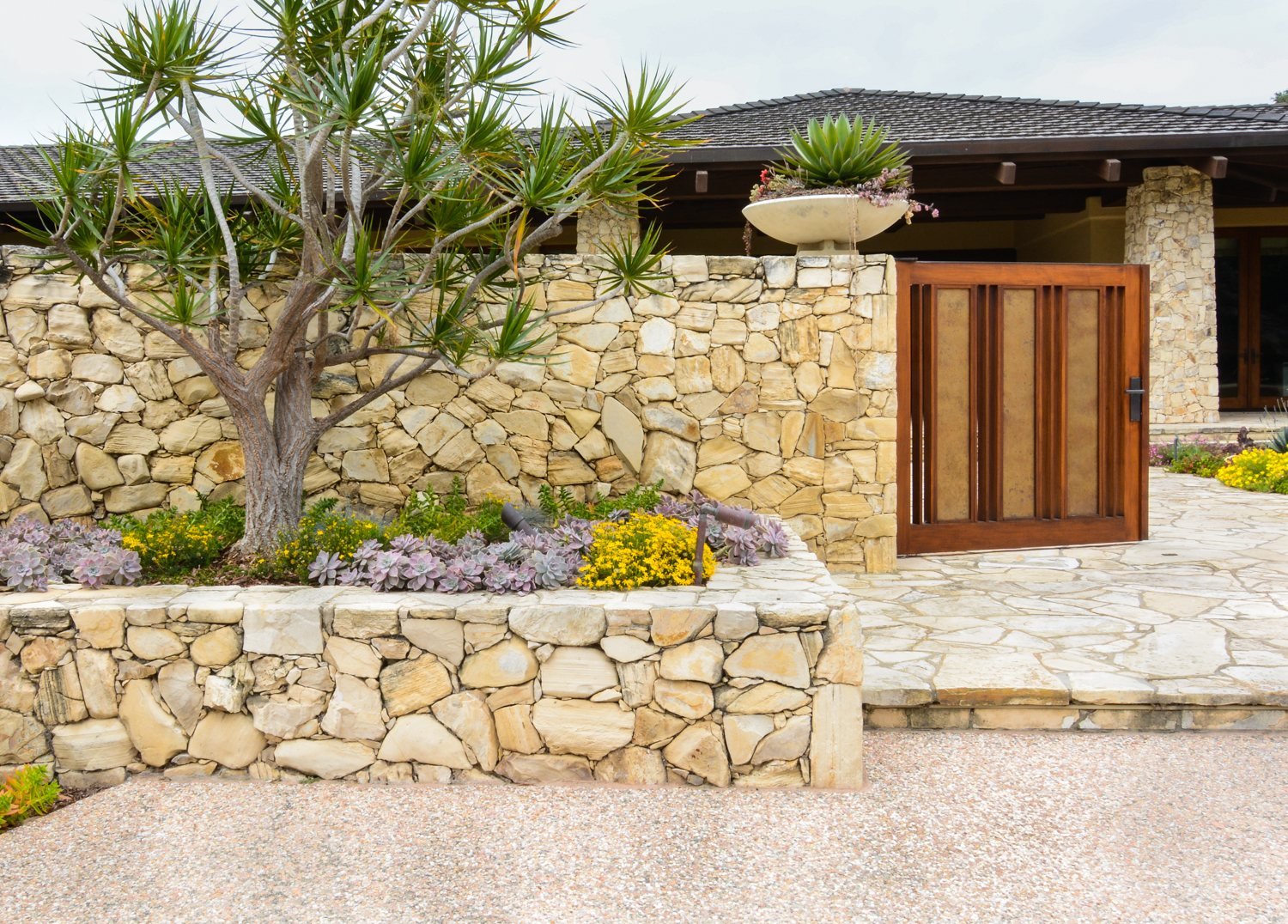
It’s a privilege to keep an eye on this garden and help it mature with monthly maintenance. When I look at these photos and consider how these plants have grown since they were first planted, I feel the excitement again of caring for them, and I wonder, what will the garden mature into? Will the plants keep their promise?
I’m delighted by the garden’s serenity, and the homeowner’s words give me great joy: “You couldn’t have captured my vision any better.”
Photography by Emma Almendarez